Six Filters Hiding in Plain Sight — and the Five-Minute Monthly Habit That Keeps Them Honest

Photo: George Bridges Black (died 1898), Public domain, via Wikimedia Commons
Most of us clean what we can see. Worktops, floors, the bit of the bathroom mirror that catches the light. Meanwhile, half a dozen small components around the house are doing the dirty work on our behalf — trapping grease, lint, hair and dust — and we only think about them when something smells, rattles or stops working.
The good news is that none of this takes a Saturday. Done monthly, the whole lot is roughly five minutes per appliance, and it quietly extends the life of things you'd rather not replace. Here's the room-by-room tour.
Kitchen first: the extractor hood
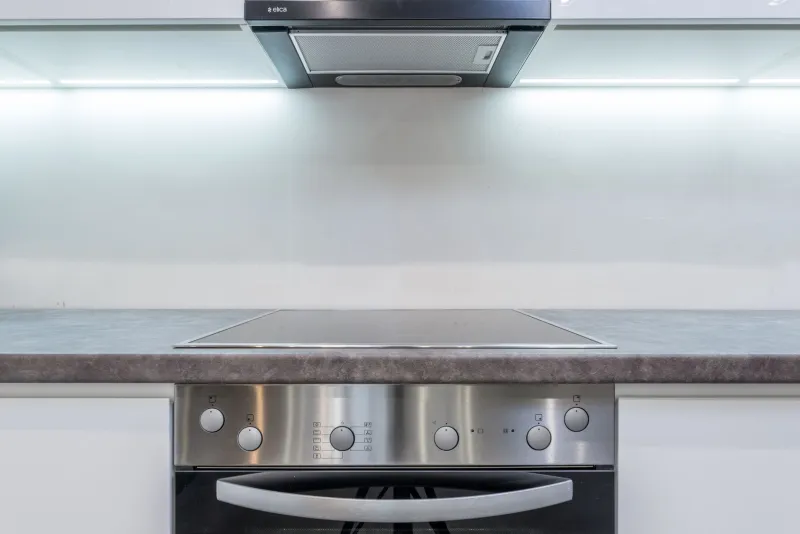
The metal mesh filter above your hob is the hardest-working thing in the kitchen and the most neglected. It catches cooking grease that would otherwise settle on your cupboards as a sticky film you only notice when the sunlight hits it.
How often: once a month if you cook most days, fortnightly if you're a serious fryer.
How: lift it out, then soak in hot water with a couple of drops of washing-up liquid and a spoon of bicarbonate of soda for ten minutes. Rinse, dry fully, refit. Dishwasher-safe models can go on the top rack, but check the manual first.
Signs you've left it too long: cooking smells lingering long after the meal, a fan that sounds strained, grease visible on the underside of the hood, or condensation on the wall above the hob. Carbon filters (the ones in recirculating hoods) can't be washed — swap them every three to four months.
The tumble dryer: lint and the one behind the lint
Everyone empties the fluff screen. Fewer people know about the second filter — the condenser or heat-pump base filter — which sits behind a panel at the bottom of the machine and clogs with a fine grey felt that strangles airflow.
How often: fluff screen every single load; the lower filter a rinse under the tap once a month.
Signs of neglect: clothes taking two cycles to dry, the machine feeling hot to the touch, a musty smell on finished washing. Lint build-up near a heat source is a genuine fire risk, so this one is worth being boring about.
The washing machine filter
There's a small round hatch at the bottom front of most machines (or behind the kickplate on integrated models). Behind it is a filter that collects coins, hair grips, bra wires and the general contents of your pockets.
How often: monthly. Put a towel down, unscrew slowly, let the residual water drain into a shallow tray.
Signs of neglect: water pooling in the drum after a cycle, a machine that won't drain, a sour smell in the rubber door seal, or a spin cycle that sounds like it's gargling. While you're down there, wipe the inside of the door seal and check the detergent drawer for black mould.
The dishwasher
The filter basket at the bottom of the tub catches food debris so it doesn't get recirculated onto your plates. It twists out in seconds.
How often: monthly — rinse under a hot tap and give the spray arms a scrub with an old toothbrush. A monthly hot cycle with a dishwasher cleaner keeps limescale at bay, particularly in hard-water areas.
Signs of neglect: cloudy glasses, gritty residue on cutlery, food flecks stuck to mugs, or that damp, slightly fishy smell when you open the door. If the water in the bottom won't clear, the filter is usually the culprit.
The vacuum cleaner
Bagless vacuums have at least one washable filter, sometimes two, plus a cyclonic assembly that needs emptying properly rather than just tipping out the bin.
How often: filters rinsed monthly; replaced every six to twelve months depending on how much pet hair you generate. Always dry them completely — a damp filter smells worse than the carpet did.
Signs of neglect: loss of suction, dust being blown back out of the exhaust, a hot motor smell, or a machine that's noticeably heavier to push. If you've got a bagged model, the bag is the filter; change it when it's two-thirds full rather than waiting for the light.
The radiator you forgot about
Not a filter in the technical sense, but the convection fins behind your radiator panels are a dust trap. Every time the heating comes on, they blow a fine warm dust around the room — which is why skirting boards near radiators grey over so quickly.
How often: a monthly pass with a long-handled duster or a radiator brush, plus a proper wash-down of the panels when you're doing the autumn deep clean before the heating goes on in earnest.
Signs of neglect: dusty marks on the wall above the radiator, a faint burning-dust smell at the first switch-on in October, and blackened patches on curtains hanging nearby.
The five-minute habit
A workable routine for most households looks like this:
- Weekly: empty the dryer fluff screen, empty the vacuum bin.
- Monthly: hood filter, dryer base filter, washing machine filter, dishwasher filter, vacuum filter rinse, radiator brush-down.
- Quarterly: carbon hood filter swap, dishwasher cleaning cycle, check the washing machine seal for mould.
- Yearly: replace vacuum filters, book a professional clean for anything you can't reach.
Set a phone reminder for the first Sunday of each month and treat it like bin day — a small, unglamorous task that stops bigger jobs from forming.
When to stop DIY-ing it
Some jobs are genuinely beyond a monthly rinse. Call in a professional if:
- The extractor ductwork needs cleaning — that's the hidden run of pipe behind the plasterboard, and grease build-up inside it is a fire hazard you can't see.
- The dryer's full ducting is long, flexible, or packed with compacted lint.
- Your machine smells sour even after a filter clean, which usually means mould deeper in the drum housing.
- Radiators need removing for a proper flush, or you've got a build-up of sludge in the system.
- You're in a rental and don't want the liability of dismantling appliances.
Everything else is a pair of gloves, a bowl of hot water and five minutes a month. Your appliances will run quieter, your kitchen will smell better, and your replacement budget will stay where it belongs — in your pocket.