Hard Water, Soft Landing: A Room-by-Room Guide to Limescale in UK Homes
Hard water is one of those British household problems that arrives quietly. You notice a faint white ring around the tap, then the kettle starts taking longer, then the shower screen looks like frosted glass. None of it is a disaster, but left alone limescale makes appliances work harder, clogs showerheads and makes cleaning feel like a losing battle. The good news is that scale is predictable. Once you know where it likes to settle, you can deal with it room by room without reaching for the most aggressive cleaner on the shelf.
Know your water first
Hard water is rich in dissolved calcium and magnesium. When it is heated or left to evaporate, those minerals come out of solution as calcium carbonate — the chalky stuff we call limescale. In the UK, hard water is common across London, the South East, East Anglia, much of the Midlands, parts of Yorkshire and Hampshire, Kent, Essex, Suffolk, Norfolk and the Thames Valley. Soft-water patches include Scotland, Wales, the South West and parts of the North West. Your water supplier should publish a hardness figure for your postcode, and it is worth a look before you buy yet another miracle spray. A simple home test: put a drop of white vinegar on a white crust. If it fizzes, it is probably scale.
Kitchen: kettles, taps and appliances
The kettle is usually the first casualty. In a hard-water area, descale monthly — every six to eight weeks if you are lucky with water. A tablespoon or two of citric acid, or a 50/50 mix of white vinegar and water, brought to the boil and left to soak for 20 to 30 minutes will lift most light scale. Rinse thoroughly, then boil fresh water twice and discard before using it for drinks. Avoid scrubbing heating elements with anything metal.
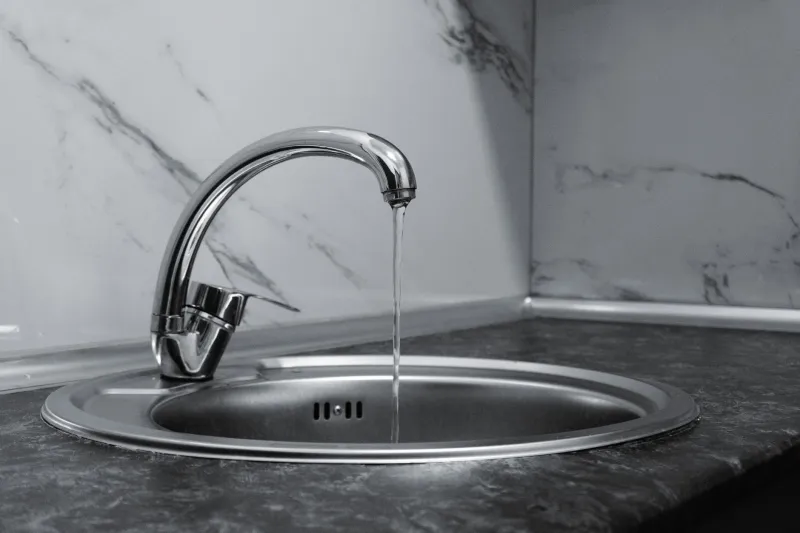
Taps and sink edges respond well to a vinegar-soaked cloth or a small bag tied around the spout for 20 minutes. Use a soft toothbrush around the base, rinse and dry. Do not let acid sit on natural stone worktops, marble or limestone; it will etch the surface. For washing machines, run a hot maintenance cycle with a proprietary descaler or citric acid, clean the filter and leave the door ajar afterwards. Dishwashers need salt topped up, rinse aid checked and a monthly descaler cycle if your area is very hard. Coffee machines and boiling taps should be descaled to the manufacturer's instructions — not with whatever is in the cupboard.
Bathroom: showers, screens and toilets
Showerheads are scale magnets. If yours is removable, soak it in a vinegar or citric acid solution, then scrub the nozzles with an old toothbrush. For fixed heads, fill a sturdy bag with the solution, tie it around the head and leave it for half an hour. Rinse well and run the shower. Chrome should be rinsed and dried rather than left soaking indefinitely.
Shower screens go cloudy because soap scum and scale team up. A diluted citric acid spray, left for a few minutes and wiped with a microfiber cloth, will usually shift the film. A squeegee after every shower is less glamorous than a trendy cleaner, but it is far more effective. In the toilet, use a citric acid paste or a dedicated limescale remover around the waterline, leave it to work, then scrub with a non-scratch pad. Never mix bleach with acidic cleaners — the fumes are nasty.
Utility, glass and the awkward spots
Windows and glass splashbacks collect water spots, especially in hard-water areas. A squeegee and a diluted vinegar rinse help, but test any tinted film first. Irons, humidifiers and vases can all scale up; use distilled water where the manufacturer recommends it. Boilers and sealed heating systems are a different matter. If you hear kettling, see repeated pressure problems or have very thick scale, call a qualified heating engineer rather than trying to descale pipework yourself.
Prevention beats polishing
You cannot change your water supply, but you can change how often scale gets a chance to set. Dry taps and shower screens after use. Squeegee glass. Run monthly descale cycles. Keep dishwasher salt topped up. If scale is a constant battle, a water softener or limescale inhibitor may be worth discussing with a plumber. Remember that softened water is not usually for drinking, so keep a separate unsoftened tap for the kitchen.
When to bring in help
Light scale is a DIY job. Thick deposits in shower valves, natural stone, heavily scaled bathrooms and commercial kitchens are better handled by a professional who knows which chemicals are safe for which surface. If your bathroom has become a patchwork of half-removed scale and scratched chrome, stop before you make it worse. Oulton Cleaning can take on the descaling and the detail work, leaving you with surfaces that feel smooth again rather than merely less gritty.
Limescale is British water's calling card. Read it early, treat it gently and keep up the small habits, and it stops being a monthly emergency.